McAllenGarageSales.com
Your neighborhood treasure map!
How to Spot Quality Secondhand Furniture in McAllen
Furniture is where the best garage sale deals hide, and where the worst ones do too. A dresser that looks solid from the driveway can turn out to be particleboard wrapped in wood-grain film. A "barely used" armchair can be hiding a broken frame under a fresh throw blanket. The difference between a $40 find that lasts twenty years and a $40 mistake headed for the curb usually comes down to sixty seconds of inspection you didn't know to do.
McAllen garage sales move fast, especially once Winter Texan season brings out more sellers and more shoppers competing for the same pieces. This guide covers the checks worth slowing down for, so you can buy with confidence instead of hoping for the best.
Why Furniture Is the Highest-Risk Category
Clothes and books are easy to evaluate at a glance. Furniture hides its problems. A coat of paint can mask water damage. A blanket draped over a cushion can hide a torn seam or a sagging frame. And because furniture is bulky and awkward to return once it's loaded into your car, a bad call here costs more than a wasted dollar or two, it costs a trip to haul the thing back out to the curb yourself.
The upside is that most furniture flaws are checkable in under a minute if you know where to look. Wood construction, joints, drawers, and upholstery each have a quick test.
Wood vs. Particleboard: How to Tell in 10 Seconds
Real wood and particleboard (or veneer over MDF) can look nearly identical under a coat of stain, but they behave very differently once they're in your home.
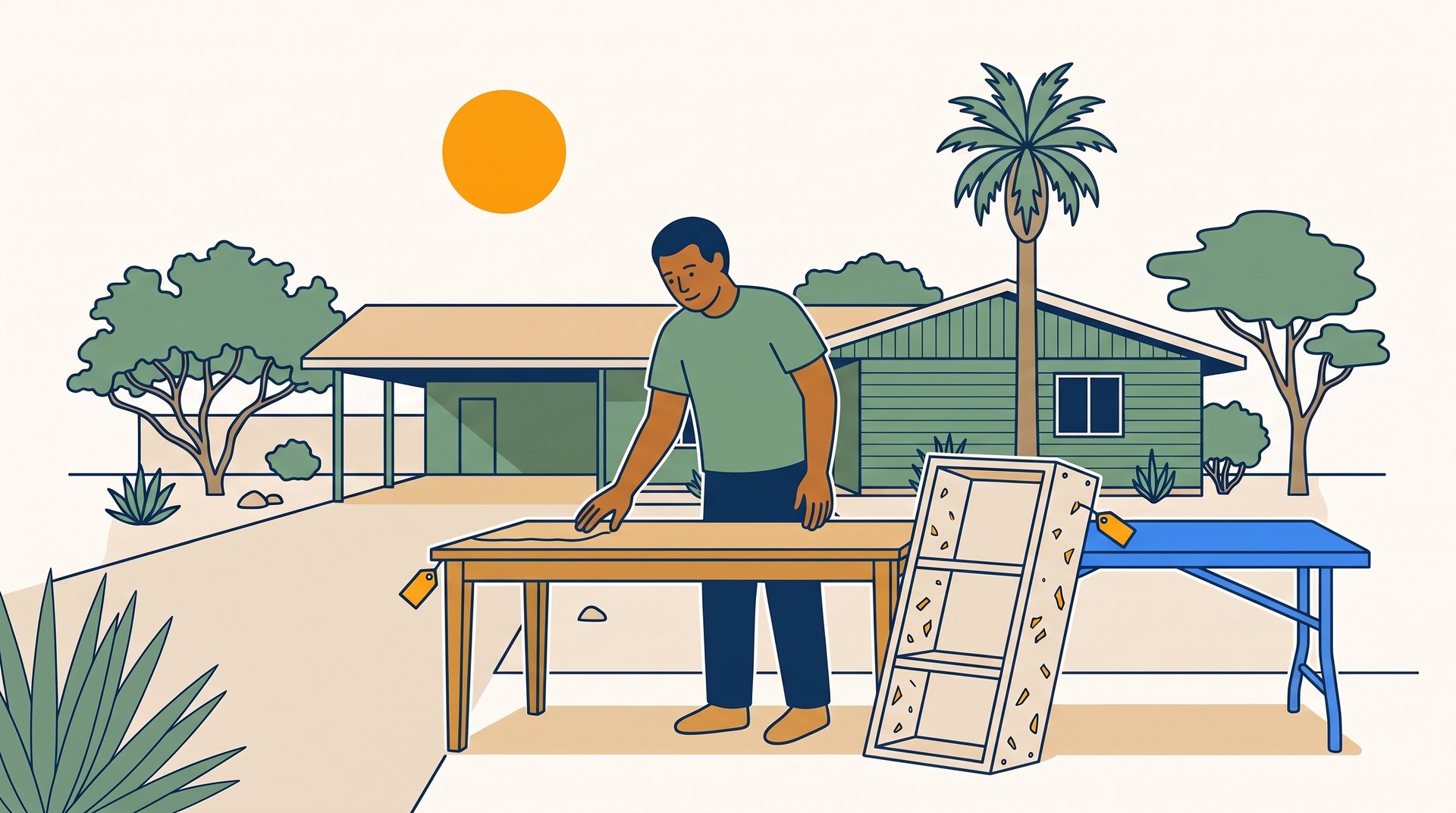
- Check the edges. Solid wood shows consistent grain running through the entire thickness of the board. Particleboard shows a flat, uniform texture at any cut edge, sometimes with visible wood chips pressed together.
- Check the weight. Solid wood pieces are noticeably heavier for their size. A lightweight dresser is almost always particleboard or a hollow-core construction.
- Check the underside or back. Manufacturers rarely bother finishing surfaces buyers won't see. An unfinished particleboard back or bottom is a reliable tell, even when the visible surfaces are convincingly stained.
- Tap it. Solid wood gives a solid, dense knock. Particleboard sounds hollower and thinner.
None of this means particleboard furniture is worthless. A particleboard bookshelf that will live in a closet for a few years is a perfectly fine buy at the right price. Just don't pay solid-wood prices for it, and skip it entirely for anything that will carry real weight or see daily wear, like a nightstand drawer or a dining chair.
Joints, Drawers, and Structural Checks
Once you've confirmed the material, check how it's put together. This is where furniture actually fails.
Joints: Look at where legs meet the frame, and where sides meet the top. Dovetail or mortise-and-tenon joints (interlocking wood pieces) hold up for decades. Staples, glue alone, or visible screws driven straight through a butt joint are weak points that loosen with use. Give the piece a gentle wiggle, wobble at the joints means it won't survive a move.
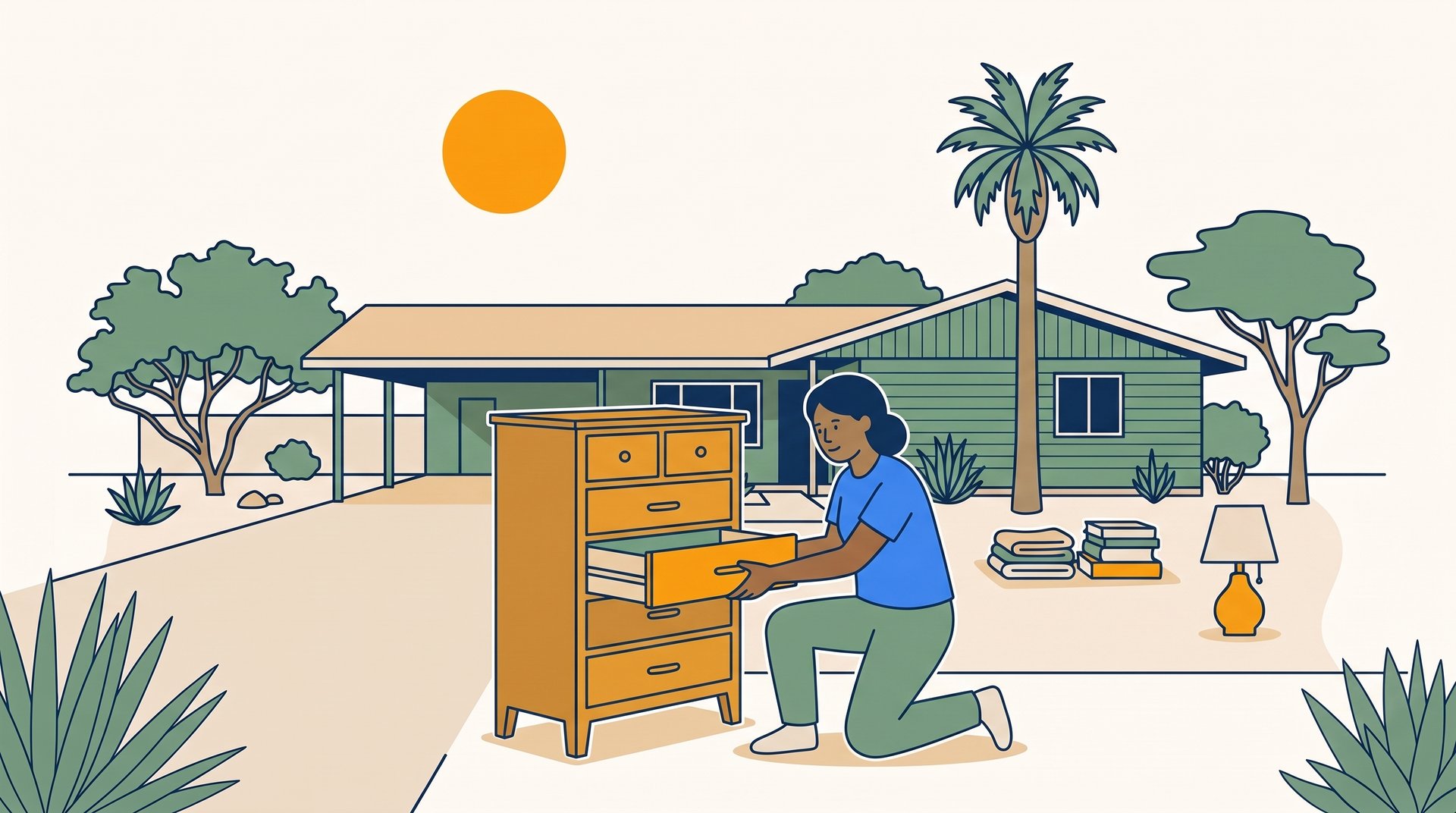
Drawers: Pull every drawer all the way out. It should slide smoothly without sticking or dropping at the end. Check the drawer bottom for sagging or cracks, and look at the corners for the same joint quality you checked on the frame. A drawer that sticks now will only get worse.
Legs and feet: Press down on each corner of a table or dresser. It shouldn't rock. A wobble usually means an uneven or damaged leg, which is fixable but worth factoring into your offer.
For pieces that pass these checks and need a little cosmetic love anyway, our upcycling project guide covers easy ways to refresh solid bones without a full restoration.
Upholstery and Odor Red Flags
Upholstered pieces (sofas, armchairs, ottomans) need a different kind of inspection, since the frame is hidden under fabric.
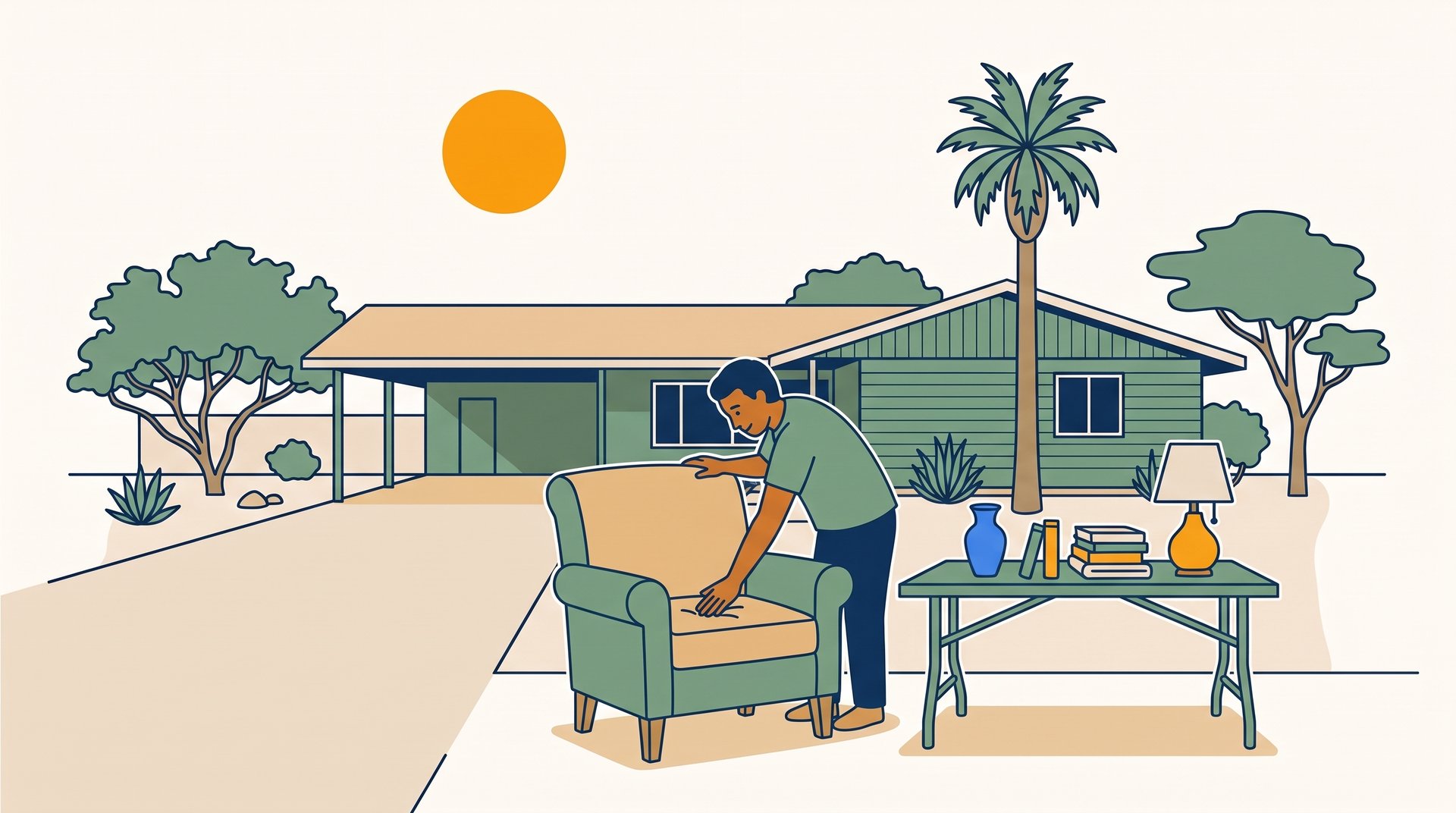
- Press the cushions. They should spring back within a couple of seconds. Cushions that stay compressed have worn-out foam, which means a full re-stuff or replacement to fix.
- Check underneath. Flip the piece if you can and look at the frame and springs through any exposed gaps. Sagging webbing or visibly broken springs are expensive to repair.
- Smell it. Smoke odor and mildew both soak deep into cushion foam and padding, not just the visible fabric, and neither fully airs out. If it smells off at the sale, it will smell off in your living room too.
- Look for stains under cushions, not just on visible surfaces. Sellers sometimes flip a cushion to hide the worst spot.
A structurally sound piece with dated but clean fabric is an easy reupholster later. A piece with hidden odor or a broken frame under decent-looking fabric is not a deal at any price.
When "As-Is" Is Still a Good Deal
Not every flaw is a dealbreaker. A wobbly leg, a sticky drawer, or a scuffed finish are all fixable in an afternoon for a few dollars in supplies, and sellers will often knock down the price further once you point out the issue (politely, and with the same respectful negotiation approach you'd use for anything else). What isn't worth the risk is anything with a compromised frame, hidden odor, or structural joint failure. Those problems don't get better with a coat of paint.
Our pricing guide gives general starting prices for small and large furniture, so you'll have a baseline to judge whether a quoted price already accounts for the flaws you found or whether it's worth countering. And if you're planning to hit several sales in one morning to compare pieces, a little route planning goes a long way toward covering more driveways before the good stuff is gone.
Ready to start the hunt?
Looking for Garage Sales in McAllen?
Explore our interactive map to find all city-permitted garage sales happening near you!
Explore Garage SalesHosting a Garage Sale?
Register your city permit and your sale automatically appears on our map—reaching thousands of local shoppers!
Register Your SaleRecent Posts
Secondhand Baby Gear Safety: A McAllen Parent's Checklist
Estate Sale vs. Moving Sale vs. Garage Sale: The Difference
Trick-or-Treasure: Halloween Costumes and Decor in McAllen
Selling Tools and Equipment: What They're Worth in McAllen
How to Spot Quality Secondhand Furniture in McAllen
A Winter Texan's Guide to Furnishing a Home from McAllen Garage Sales
Winter Texans Are Coming: How McAllen Garage Sales Change
Finding Vintage Clothing and Fashion Gems at McAllen Garage Sales
How to Photograph Garage Sale Items for Your Listing
How to Sell Clothes at a Garage Sale: What to Display, Price, and Actually Sells
Guides & Resources
Join for Free!
Create a free account to save listings and plan multi-stop routes.
Hosting a Sale?
Register your city permit and your sale automatically appears on our map for McAllen shoppers.
Register PermitAbout Us
McAllenGarageSales.com is your neighborhood treasure map for discovering and hosting garage sales in McAllen, Texas. We make it easy to find amazing deals or show your sale to local shoppers!
Learn More